
The One-Line Answer
Here it is, so you can stop arguing: a battery backup keeps your garage door opener running through a power outage for a handful of open-and-close cycles, and almost nobody is legally required to have one — unless the garage door is genuinely the only practical way in or out of the house. That one exception is usually what starts the argument in the first place.
How Battery Backup Actually Works
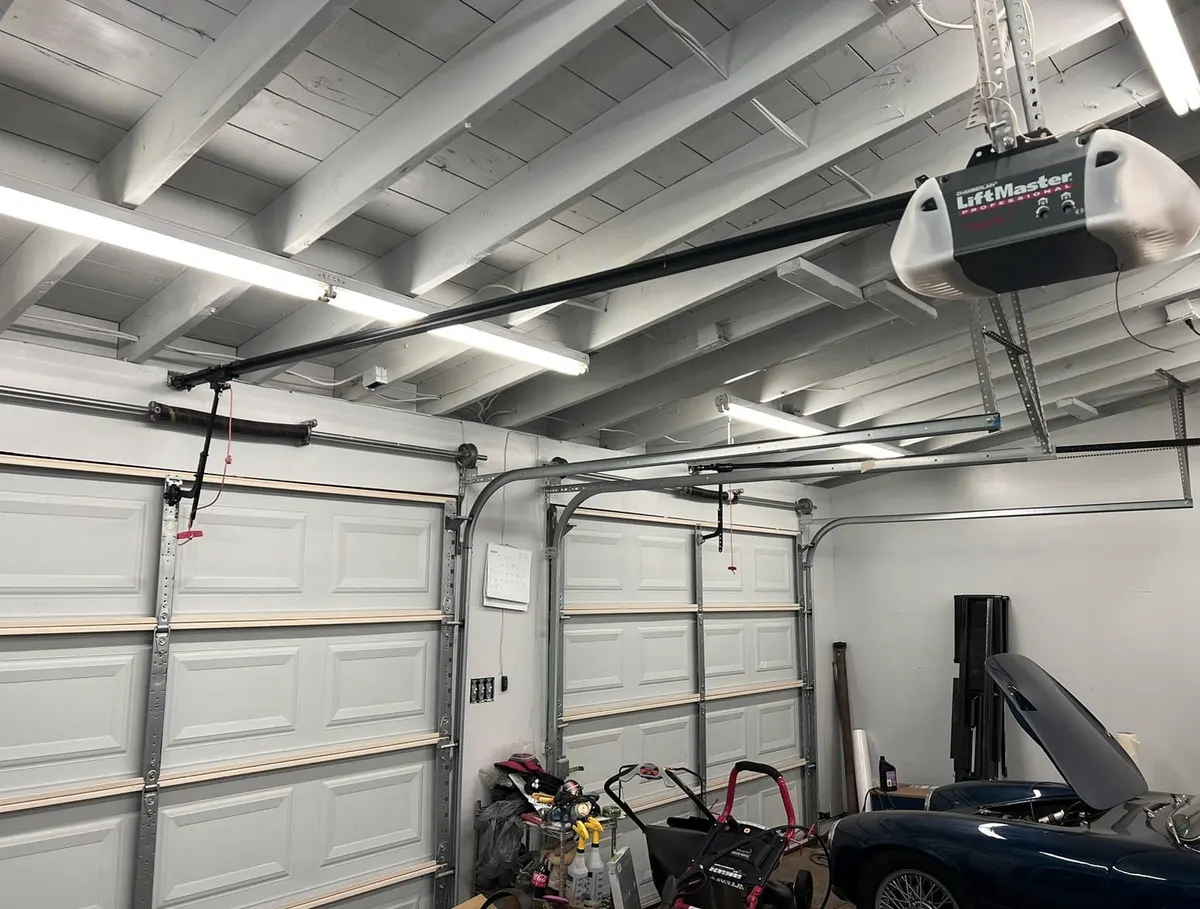
Not every opener can even take a battery backup. Older chain-driven units built around a simple AC motor usually can't. Most openers made in the last decade or so — especially belt-drive and screw-drive models from LiftMaster, Chamberlain, and Genie — have a battery compartment built into the housing, or they accept an add-on battery pack.
While the power is on, the battery sits there trickle-charging. The moment the circuit drops, the opener switches over automatically. You won't notice anything except maybe a slower motor or a quieter chime.
The important part for settling arguments: that battery is rated for a limited number of cycles, often somewhere in the 20-to-50 range depending on the model, not unlimited days of use. It's built to get your car out (and back in) during an outage, not to run your garage like normal for a week.
When You Actually Need One
- The garage is your real front door. If the household routinely enters and exits through the garage because the front door is rarely used, blocked by landscaping, or just inconvenient, losing the opener during an outage is a real problem, not an inconvenience.
- Someone has mobility limitations. If lifting a heavy door by hand isn't realistic for someone in the house, battery backup removes a genuine safety gap.
- You need the car during work hours. If a daytime outage would strand a vehicle you need for a job, errand, or appointment, backup power earns its keep fast.
- Your opener manual or local code flags it. Some jurisdictions require battery backup when a garage door functions as a required emergency exit from the home. Check your opener's installation manual and any permit documents from when the opener was installed — don't assume either way.
When You Can Reasonably Skip It
- You have another exterior door you actually use without a second thought.
- You're comfortable pulling the manual release cord and lifting the door by hand — which only works smoothly if the springs are properly tensioned and in good condition.
- You already run a generator that covers the garage circuit during outages.
Why This Matters More Here Than in a Lot of Places
Afternoon downpours and hurricane-season storms knock out power more often in this part of Florida than people like to admit, and it's not always a multi-day hurricane outage — sometimes it's just a tripped breaker from a lightning strike or a tree limb on a line during a routine summer storm. That's exactly the kind of short, sudden outage a battery backup is designed for.
There's a catch, though: heat and humidity are hard on batteries. A backup battery rated for a certain lifespan in a lab doesn't get that lifespan sitting in a garage that regularly hits triple digits in the afternoon. Expect shorter real-world life than the box promises, and don't be surprised if a battery that tested fine last year is dead this year.
If you're closer to the coast, salt air adds another wrinkle — corrosion on battery terminals and connector wiring happens faster than inland, and corroded contacts are a common reason a battery backup fails silently until the exact moment you need it.
What Battery Backup Won't Do
This is usually the part that actually settles the argument. A battery backup:
- Won't fix an opener motor that's been fried by a power surge during a storm — that's a separate failure, and backup power can't run a dead motor.
- Won't help if the real problem is a door off its tracks, a broken spring, or a snapped cable. The battery powers the motor; it doesn't fix a mechanical jam.
- Won't carry you through a multi-day outage with normal daily use. It's for getting the car out a few times, not running the household as usual.
A Quick Way to End the Debate Tonight
- Check your opener's brand and model (usually printed on the motor housing) to see if it has built-in battery backup or accepts an add-on kit.
- If it has one, test it: trip the breaker for the garage circuit and see if the opener still fires. If it doesn't respond, the battery is likely dead or the terminals are corroded.
- If you don't have backup power, time how long it actually takes to disconnect the manual release and lift the door by hand. That number usually settles whether it's worth installing.
When to Call Royal Palm Beach Door & Opener
If your opener is older and doesn't support battery backup at all, or if you've tested an existing battery and it's not holding a charge, that's worth a service call rather than a guessing game. Our Garage Door Opener Installation service can replace an aging unit with a current model that includes reliable battery backup built in, sized correctly for your door's weight and cycle needs. If the opener itself is fine but you're not sure the battery, wiring, and connections are in good shape heading into storm season, our Garage Door Maintenance & Tune-Up covers exactly that — checking the backup system along with springs, cables, and tracks so nothing surprises you during the next outage.
If you're in Royal Palm Beach, Wellington, West Palm Beach, or anywhere nearby and you want a straight answer about whether your setup needs battery backup, call Royal Palm Beach Door & Opener. We'll check your opener, settle the argument, and get it handled before the next storm rolls through.